
Patrick Riachi – Writer, Researcher, and Political Analyst
Mount Lebanon – April 23, 2026
Lebanon stands again at a narrow edge, where fire advances faster than reason, and where words struggle to catch up with events that wound both land and spirit.
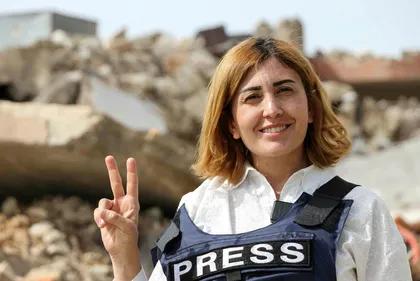
A journalist, Amal Khalil, was killed in the south while doing nothing more than bearing witness. She stood where truth is often most fragile, between the first Israeli strike and the second, and paid with her life. Her colleague, Zeinab Faraj, was wounded. Even those who came to rescue were forced back, as if mercy itself were under fire.
This is not only an attack on a person. It is an injury to meaning itself, to the simple human act of seeing. In Beirut, people gathered in Martyrs’ Square in a vigil marking the killing of journalists in the south, especially Amal Khalil and the wounding of Zeinab Faraj. It was not a routine gathering, but a public act of mourning and protest against the targeting of media workers in the field. It carried a double weight: grief for the dead, and insistence that witnessing itself must remain protected.
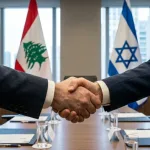
While the ground burns, diplomacy moves cautiously. Washington speaks, Paris supports, and the Arab world searches for a common voice, all trying to hold the line before it gives way. However, diplomacy that follows violence often arrives too late, like a doctor called after the wound has deepened.
Beyond this, other hands are at work, as regional voices move toward a common position, aware that the price has already been too high.
Aid arrives as a form of solidarity, but also as an admission that suffering has grown beyond what Lebanon can bear alone. At the same time, the international presence that once stood as a fragile barrier now faces real uncertainty. The future of the United Nations Interim Force in Lebanon is no longer assured, its role increasingly questioned and its ability to operate under strain. With that uncertainty comes a deeper dread, of weakness, of absence, of a space left unguarded, where restraint fades and the distance between tension and open conflict grows dangerously short.
What we are living is not a passing moment, but a convergence of pressures that test the limits of our fortitude. Violence intensifies. Responses multiply.
Lebanon is not simply a place where events happen. Lebanon is a message of diversity that meets coexistence, one that speaks through its trials, one that insists that even in fracture there can be meaning, and even in suffering there can be a call to something higher than collapse.
The question is no longer whether tension exists. It is whether there remains enough wisdom, enough restraint, and enough responsibility to ensure that this message is not lost, and that what is coming does not surpass what can still be endured.